Showing posts with label Butterflies. Show all posts

Tuesday, 7 April 2015

Springtime in Worcestershire

As Marcel Proust said "The real voyage of discovery consists not in seeking new lands but seeing with new eyes."

Apparently there has never been a greater disconnect between the average bod in the street and the countryside as there is right now.

As someone who was fortunate to grow up in the countryside of Warwickshire but who has lived in four of the biggest cities in the UK, I can understand this. The question has to be asked "Does it matter?" 

Living in the countryside and working in Birmingham gives me that transition from countryside to city every day that I work. It is why I felt it more important than most that to develop industrial scale farming here was something that I had to protest about and, if possible, stop.

So far so good. However, the battle will continue because population continues to grow apace, the majority of the population in this country are disconnected and do not value the countryside and more importantly, don't understand it or even really care. Meat is pre-packaged and in fact most people don't want to think about where it comes from.

In the meantime, after many years of travelling and visiting some of the most beautiful places in the world, I see the place I live, here in Worcestershire, with new eyes and say a "thank you" to all those who campaigned against the chicken farms at Upton Snodsbury for being able to do so.


The Spring is well under way and here are some photos from a beautiful Easter weekend in Worcestershire.
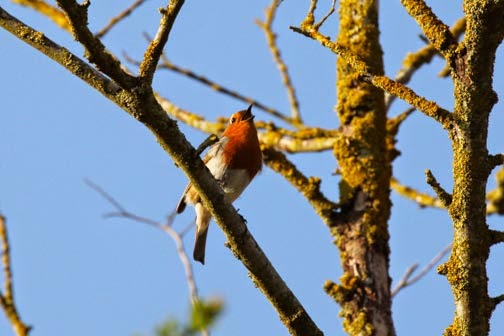
Robin singing his heart out

Lesser Celandine
According to Gilbert White, a diarist writing around 1789 in the Hampshire village of Selborne, the plants came out on February 21, but it is more commonly reported to flower from March until May, and is sometimes called the "spring messenger" as a consequence.

Local Nature Reserve Piddle Brook Meadows

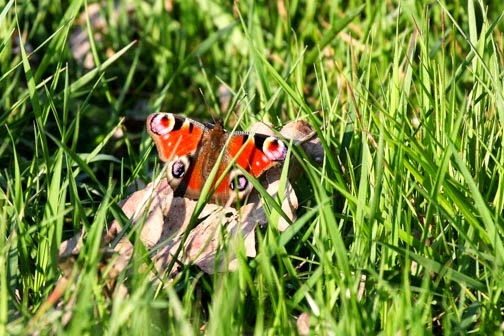
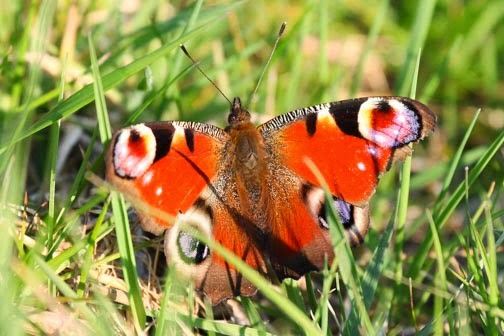
Lovely - an early Peacock

Very new!

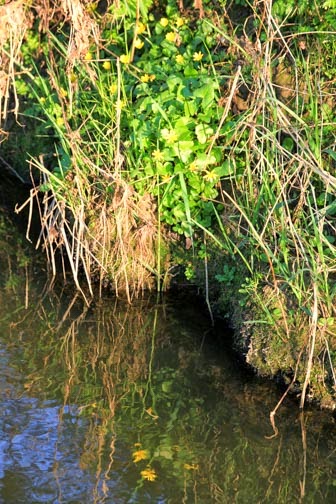
Reflection of Lesser Celandine in Piddle Brook
 D H Lawrence - "...going down the hedgeside with the girl, he noticed the celandines, scalloped splashes of gold, on the side of the ditch. 'I like them' he said 'when their petals go flat back with the sunshine. They seem to be pressing themselves at the sun.'And then the celandines ever after drew her with a little spell."

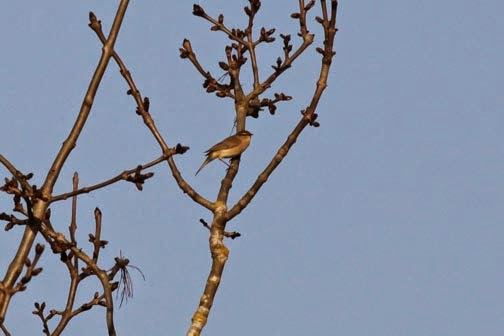
Warbler? Not sure what this is.


Plantlife is celebrating its 25th Anniversary this year. The charity which campaigns on various issues including wildflower meadows such as the ones that we have locally is currently collating votes on the nation's favourite Wildflower - to find out more click here

It's a tough one...Bluebell versus Primrose?


Tuesday, 9 September 2014

Naunton Beauchamp Walk. Worcestershire

We are so lucky to have to various Local Reserves and areas of Special Scientific Interest within a few miles of Upton Snodsbury. Administered by the Worcestershire Wildlife Trust and Butterfly Conservation these are protected areas.

Aside from this the area around Naunton Beauchamp, Grafton Flyford, Flyford Flavell and Upton Snodsbury which has Cowsden with its views over toward Abberon, is dominated by sheep farming and some arable farming.  The landscape is defined as Bishampton Claylands.

Here are some photos from a recent walk from Naunton Beauchamp up Piddle Brook towards North Piddle.Just a snapshot of a typical 1/2 hour walk. What isn't typical are heavy HGVs, trailers with manure and the smells of chicken farms! Tomorrow is the Wychavon Planning Committee Meeting. We hope that common sense prevails...again.

Yellowhammer on the road

Local with his vintage caravan

Local kerbside pears used for making traditional perry

Meadowsheet in the verges (careful cutting preserves these verges)

Quince alongside Piddle Brook

Crataegus otherwise known as Hawthorn berries

Overzealous pruning that took out the buzzards perch

Hedge clearing

Crack willow remnants alongside Piddle Brook after clearance


The typical weekend cyclists drawn to the area for its quiet lanes and attractive village (with normal rural smells, not chickens!)

Dandelion

Speckled Wood

Naunton Beauchamp Village with its no-chicken-farm.org sign

Saturday, 3 August 2013

Aposematism and Chicken Farm at Upton Snodsbury Round Two!

It's that time of year when lots of people are taking holidays. We just came back from being away too and found that the Chicken Farm Proposal at Upton Snodsbury has been re-submitted. Strangely that means that although the original plans haven't changed (the applicant has merely submitted all the documents he should have submitted in the first place) all the original objections no longer stand.  A great way to waste an awful lot of time and ratepayers money in sending out letters to the original objectors....the process is an interesting one. 

So, if you've come across this blog and would like to object to the proposal that would fundamentally change the peace, tranquillity, smell and pollution of this area please OBJECT NOW!  Find out more on the www.no-chicken-farm.org website.


Back to Piddle Brook in a moment but first..towards the ends of the post I'll upload a video of butterflies I took on a small Caribbean Island called Cayman Brac. We decided that the Big Butterfly Count would have had a hard job of counting how many there were - the word "lots" would have done quite well. They are everywhere - something that we probably won't ever see in the UK. They weren't very colourful - mainly white although just after that I'll post the swallowtail I did get a picture of.  Cayman Brac only has a population of 2000 on an island that measures 12 miles by 1 mile with a large bluff running down the middle.

One common theme between Cayman Brac and Piddle Brook (!) is the use of Aposematism in animals which indicates that you shouldn't eat them. The organism is basically saying it is dangerous or unpalatable. I wasn't aware of the word until I read about it on the Amateur Entomologists' Society website.


On my morning walk alongside Piddle Brook towards North Piddle I discovered Ragwort with three Cinnabar moth caterpillars on it. 

This is from the Amateur Entomologists' Society website - "The caterpillars have alternating orange and black bands down their bodies. The ragwort plants on which the caterpillars feed contain alkaloid poisons. As they eat the leaves the caterpillars store the poison and this is passed from caterpillar to pupa and finally to the imago/adult. The caterpillars advertise the fact that they are poisonous if eaten through their aposematic colouration."

While we were on holiday on Cayman Brac we found another caterpillar which had selected one particular Frangipani bush and there must have been around twenty caterpillars on it. It appeared to have the same message! Don't eat me was pretty clear. These caterpillars have a voracious appetite and can eat a leaf in a few minutes. The bush didn't stand much chance! The caterpillars were about the size of my index finger.

Frangipani Caterpillar from Cayman Brac
On my morning walk there were lots of white butterflies - mostly Cabbage whites, Meadow Browns and Gatekeepers
Gatekeeper Butterfly
But a Butterfly that I hadn't seen before and identified was the Small Copper - this is how it is described on the Butterfly Conservation Website - 


"The Small Copper is usually seen in ones and twos, but in some years large numbers may be found at good sites. Males are territorial, often choosing a piece of bare ground or a stone on which to bask and await passing females. They behave aggressively towards any passing insects, returning to the same spot when the chase is over.
Though it remains a common and widespread species, the Small Copper declined throughout its range during the twentieth century. Widespread through Britain and Ireland, and occasionally visits gardens."


Small Copper

Small Copper

It's more agressive behaviour was borne out by its interaction with this bee - most butterflies take off when bees land on a flower from my experience but this guy was having none of it and was quite determined that the bee shouldn't get rid of him too easily!
Bee and Small Copper Butterfly competing for nectar!

Meadowbrown


Peacock

Small White

Bee and Teasel


The trees in the distance are the edge of the field where the Chicken Farm is proposed to be located near to Froghall Bungalow

View towards Chicken Farm proposed site

Bee with damaged wings


Bee with mites on it


Butterflies in Abundance


Sunday, 30 June 2013

Wildlife Further Afield

Foster's Green and Eades Meadow are Nature Reserves that have been given National Nature Reserve Status.


This is the extract from the Worcestershire Wildlife site. If you visit it is really important not to go off the path. Where people have the flowers are easily trampled and the beauty of the site could easily be lost.


Foster’s Green and Eades Meadows were once Foster’s Green Farm and have not been ploughed for at least 100 years nor have they ever been treated with chemical fertilisers, herbicides or other agricultural chemicals.
Lying on heavy clay soils, their interest lies in the large number of plants that grow here – over 180 have been recorded - and the huge number of insects, spiders and other invertebrates that they support.  Eades Meadow is particularly famous for its green-winged orchids in spring and meadow saffron in autumn.  The colour of the meadow changes daily as different flowers come into flower throughout spring and summer.
Foster’s Green Meadow is still farmed and Eades is grazed by cattle in late autumn and early winter before being left to grow hay.  The hay is cut late the following summer after the flowers have seeded.  Following a period of growth, the field is grazed and the cycle begins again.
Part of the land was once a small orchard and a few apple trees remain.  A number of large oak trees mark the positions of old field boundaries and young trees have been plated as future replacements.  The huge elms which once grew in the hedges were killed by elm disease and their demise opened up the field to the wind and sun. 
Please note that due to the fragility of the site, visitors should not stray from the public footpath that crosses part of the meadow.


Greater Knapweed

Yellow Rattle

The brown, purse-like calyxes (containing the sepals) of Yellow-rattle give this plant its common name - brush through a wildflower meadow at the height of summer and you'll hear the tiny seeds rattling in their pods. This
annual plant thrives in grasslands, living a semi-parasitic life by feeding off the nutrients in the roots of nearby grasses. For this reason, it was once seen as an indicator of poor grassland by farmers, but is now often used to turn improved grassland back to meadow; it feeds off the vigorous grasses, eventually allowing more delicate species to push their way through.

Common Spotted Orchid

Yellow Vetch


Ladies Bedstraw - Galium Verum
In the past the dried plants of Ladies Bedstraw were used to stuff mattresses, as the fragrant scent of the plants acts as a flea killer. The flowers were also used to coagulate milk in cheese manufacture and, in Gloucestershire, to colour the cheese Double Gloucester.


A bashful Oxeye Daisy


Common Spotted Orchid


Self heal - Prunella Vulgaris
Self-heal is edible: the young leaves and stems can be eaten raw in salads; the whole plant can be boiled and eaten as a potherb; and the aerial parts of the plant can be powdered and brewed in a cold infusion to make a tasty beverage.
Medicinally, the whole plant is poulticed onto wounds to promote healing. A mouthwash made from an infusion of the whole plant can be used to treat sore throats, thrush and gum infections. Internally, a tea can be used to treat diarrhea and internal bleeding.
Quaking Grass
Gently shivering in the breeze, the loose heads of Quaking-grass are a distinctive feature of meadows and grasslands, particularly those on chalky soils. Its heart-shaped flower heads dance on delicate stems, giving the plant many different common names such as Totter Grass, Dithery Dock, Wigwams and Toddling Grass.


Small Tortoiseshell

Small Tortoiseshell

Yellow Shell Moth - Camptogramma bilineata

Chimney Sweeper - Odezia atrata

Crested Dogstail


Flag Irises